

Decorating shelves can feel daunting and leave you unsure of where to start.
How do you make the bookshelf pretty?
How do you make them look put together and not cluttered?
Here are 11 tips for creating amazing envy-worthy shelves.
1. Shop from Home
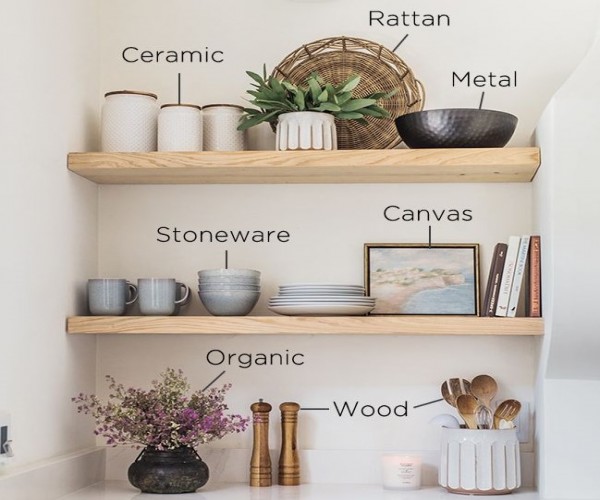
You don’t have to run out and buy a whole bunch of brand new decor. Check from your home collection. Instead of keeping random things onto the shelves, try to figure out what you would like to display from your collection. Make a list of your favourite items that you want to showcase, such as candle holders, picture frames, personal photos, metal bowls, decor books, metal orbs, greenery, artwork and so on.
2. Clusters of Three
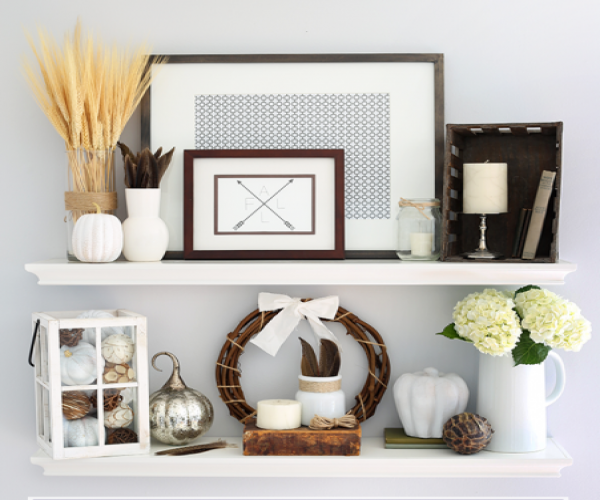
Group items and accessories together to create several triangular shapes on the same shelf. Varying asymmetric triangular groupings will add more interest and a more lived-in look. This will ensure all your ornaments, no matter how big or small, look intentionally placed. If you have more than three things, try to keep each cluster of items to an odd number.
3. Follow the Triangle Rule
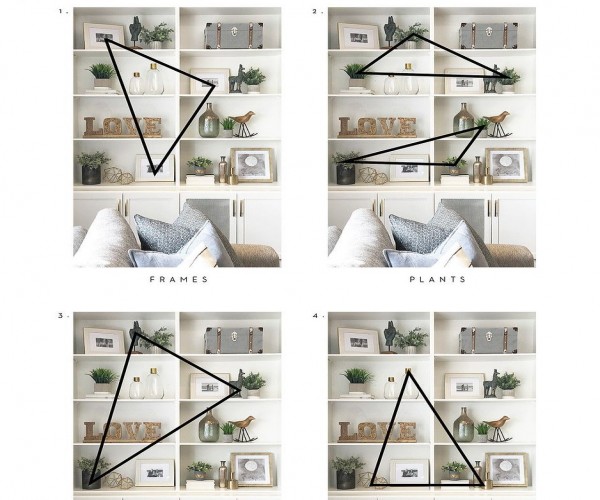
You can use the ‘Triangle Rule’ across different shelves. The triangular rule helps lead your eyes around the shelves seamlessly and effortlessly. Choose three objects of the same colour, shape or texture. They may vary in size with different visual weights. These objects will be the anchor point to your triangle. Place them on different shelves to form a subtle visual triangle and balance in the display.
4. Create Layers
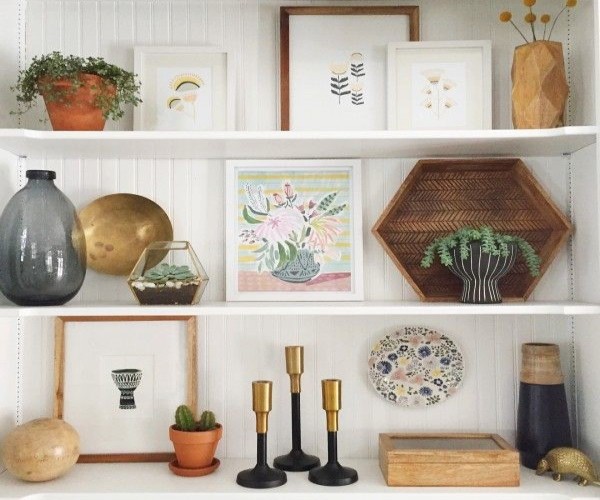
Once you’ve clustered your items in odd-numbered groups, it’s time to have fun. With each cluster, play around with the heights and directions of your objects, adding layers for more interest. Try to stay away from having similarly sized objects next to each other. Select pieces that vary in height, size, and direction they are facing. Place objects in front and behind one another to help create depth of field and magnetize space.
5. Add Plants
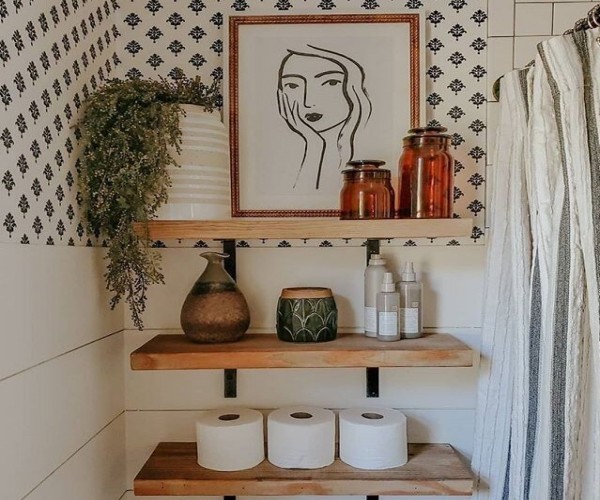
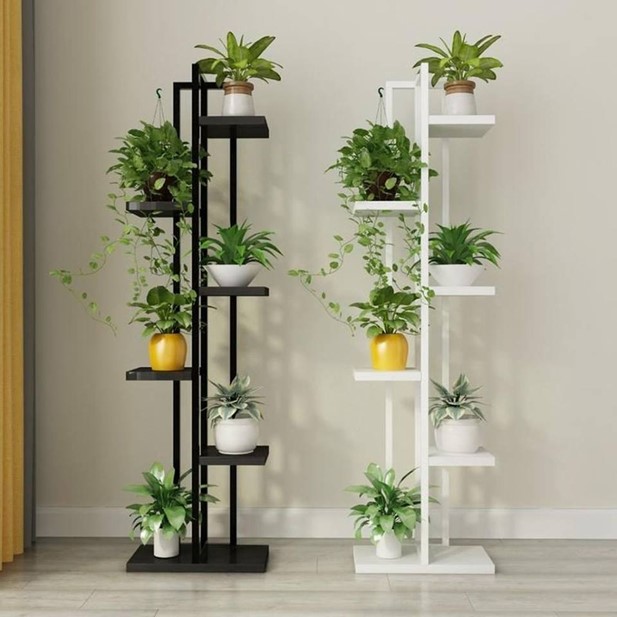
Plants are a fantastic way to add life to your shelves. When you can’t get the look right on a shelf or can’t cluster things to an odd number, consider adding a plant. With a choice of many shapes and sizes, live plants can add variation across layers, height and visual, textural interest. The Turtle Vine is a great choice of plant for a shorter layer. It can also be brought forward in front of other objects and be draped down over the edge of the shelf guiding your eyes with ease to the next point of interest.
6. Use Signature Colour
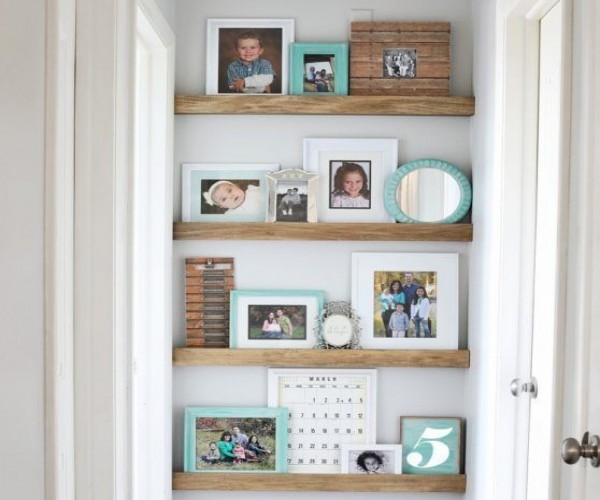
You should choose a signature colour for the objects on the shelves. Make sure that these objects are of different shapes and sizes. Follow the Triangle Rule and use them in at least three places. Placing similar colour objects on different shelves creates an eye-catching visual pattern. Spreading the colour throughout your shelves will make the whole arrangement look more organic and not staged.
7. Use Signature Shape
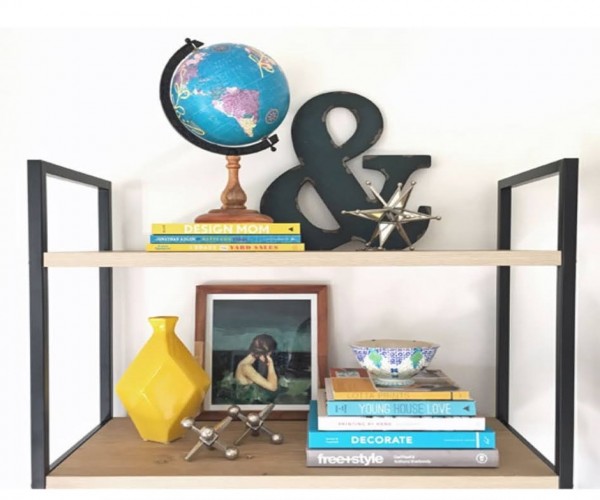
You should use a variety of shapes in your styling to create interest, but to get a cohesive look you should choose a signature shape that repeats multiple times. On this bookshelf, the signature shape is the star-shaped or pointy items like the urchin, the mirrored star and the jacks. Follow the Triangle Rule and repeat the signature shape at least three times.
8. Use Signature Texture
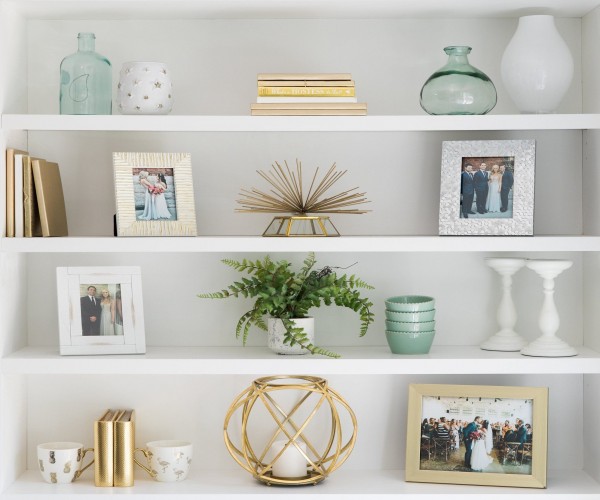
On a bookshelf, one of the things that give you the most texture is your blocks of books. The signature texture has to be in contrast to the primary object on the shelf. Textures in contrast with matte finishing books are silver objects, metallic finishes, glass, glazed ceramic. You can select one of these contrast textures and repeat it three times in the arrangement.
9. Emphasis Depth of Shelf
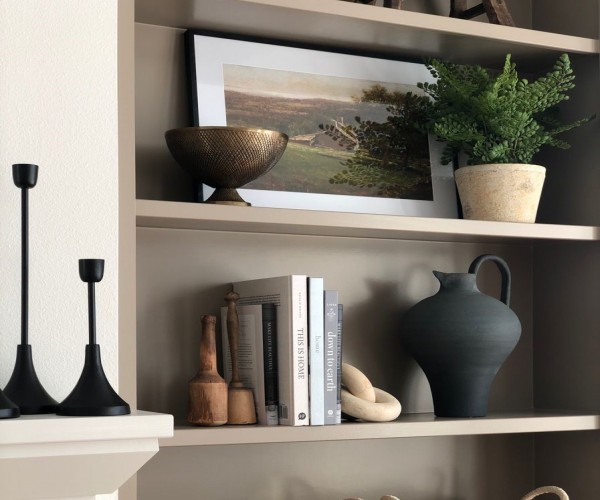
As you add in more levels, consider the depth of your shelf too. If you feel your shelf is looking a little sparse, why not lean a framed painting or photo behind your ceramics, ornaments or books? This is a simple and effective way to add another dimension to your shelf styling.
10. Elevate with Books
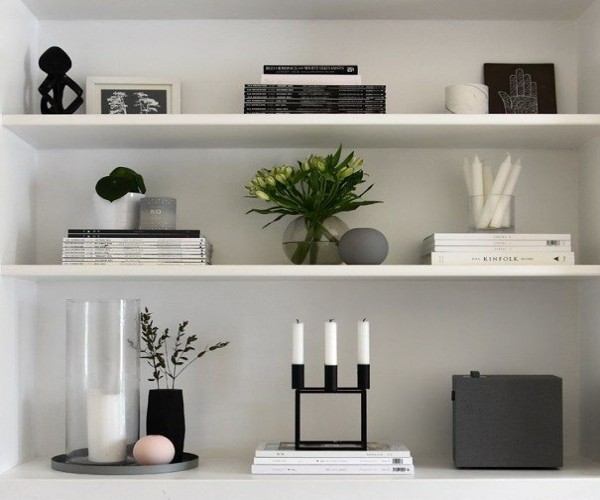
The style elements should have the ability to stand alone or work together to balance scale. If your items are similar in size, try placing one of the items on a stack of books. An object can be stacked on books to offset a vase with a similar scale beside it. This method is typically used in a space that has narrow shelves.
11. Step Back and Observe
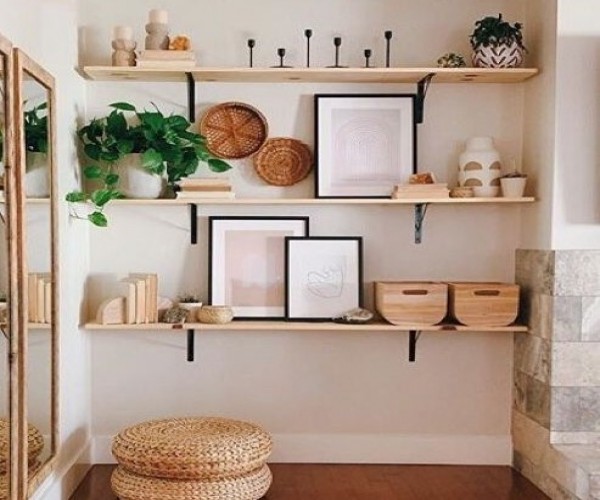
Step back and click a picture of the shelves after decorating. Taking a photo helps with noticing things you might not have otherwise. It is also helpful to walk away from the space you have decorated and come back after a while. You will take notice of any corrections instantly.




© Copyright 2026 Vdesignhappiness. All Rights Reserved.
